
Achucarro researchers explore how and when the circadian clock begins to function
The Laboratory of Circadian Physiology at ACHUCARRO, led by Ikerbasque researcher Mariana Astiz, studies how and when the circadian clock starts working by focusing on the development of the brain structure responsible for regulating it.
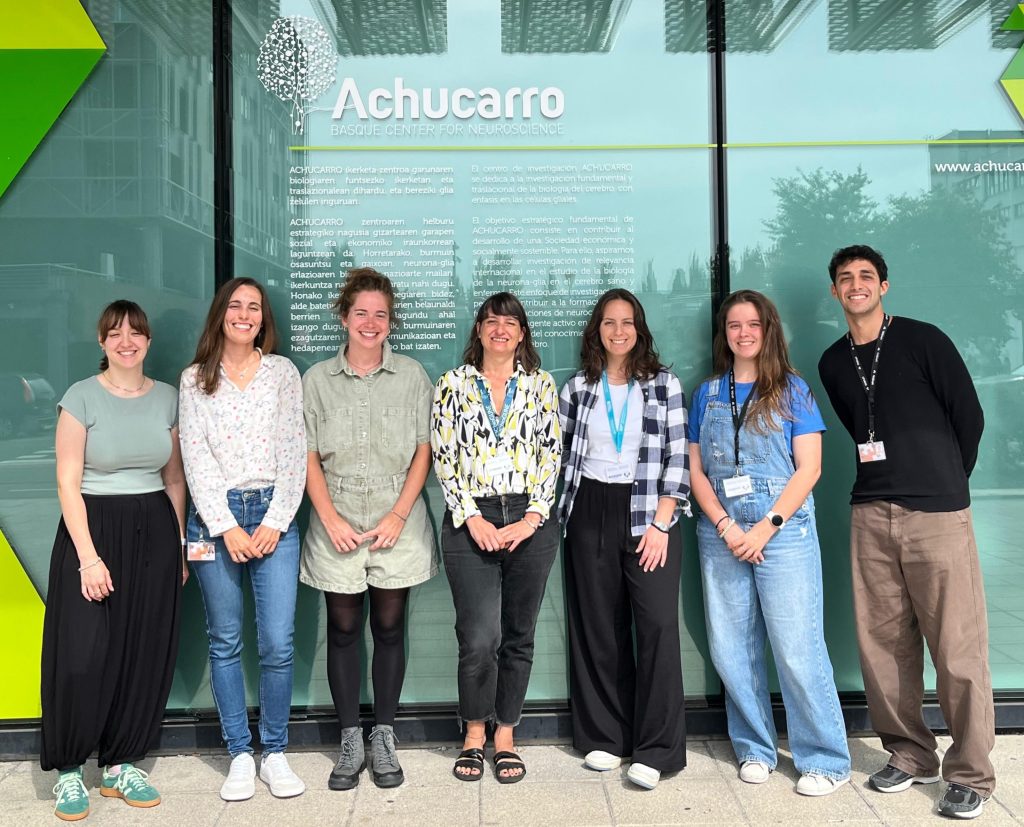
Sleeping, eating, learning, and maintaining specific activity levels are all processes adapted to a 24-hour day. This adaptation relies on the circadian system and is coordinated by a central pacemaker located in the brain. While the functioning of this system is well understood in adult organisms, many questions remain regarding how and when it first starts operating. Answering these questions is the primary goal of the Laboratory of Circadian Physiology at ACHUCARRO, led by Ikerbasque researcher Prof. Dr. Mariana Astiz.
The laboratory investigates how the circadian clock develops during the earliest stages of life, particularly in mammals, and what factors are involved in its activation. This knowledge could have significant applications in neonatal health, especially for premature babies.
“During gestation, the baby’s circadian system matures gradually by receiving environmental cues through the mother. However, when a baby is born prematurely and continues its development in an incubator, this natural maturation is disrupted, which can impact long-term health,” explains Mariana Astiz. One of the major challenges is understanding how to provide premature infants with environmental cues that replicate, as closely as possible, those they would naturally receive through the mother, thereby supporting the maturation of their circadian system.
Understanding how the biological clock starts ticking
Astiz’s team uses mouse models to study the development of the circadian pacemaker at the molecular, cellular, and systemic levels, aiming to identify which factors promote its maturation and when they act. The ultimate goal is to translate these findings to humans.
Their research focuses on the central pacemaker located in the suprachiasmatic nucleus (SCN) of the hypothalamus, the body’s main coordinating centre for circadian rhythms. Within this framework, lab members work on complementary projects that help answer this overarching question. For instance, Dr. Denise Ferrarini studies how the different cells that make up the SCN are generated, while Dr. Sylvia A. Newbold investigates the maternal signals that influence the birth and maturation of these cells.
Research with potential health impact
Every year, around 15 million babies are born prematurely worldwide. Understanding how the circadian clock develops and which signals drive its maturation is essential, as these rhythms influence key physiological processes throughout life, including sleep, feeding, mood, learning, and memory.
In addition, the laboratory studies circadian rhythms in adults and how they adapt to conditions in which sleep/wake cycles are disrupted—such as in individuals experiencing sleep disorders, chronic stress, or shift work.
Through its various lines of research, the Laboratory of Circadian Physiology at ACHUCARRO aims to advance our understanding of the mechanisms that regulate our adaptation to the environment and shape our physical and mental well-being across the lifespan. To support this work, the laboratory receives funding from the Spanish Ministry of Science, Innovation and Universities and the European Research Council (ERC).
Video of the research: https://youtu.be/16mhPskH2TM
More information about the lab: https://astizlab.research.st/