
Unlocking the Mysteries of Memory: An Interview with Neuroscientist Sadegh Nabavi
Understanding how we learn and remember remains one of the greatest challenges in neuroscience. We recently had the opportunity to speak with Sadegh Nabavi, a Principal Investigator at DANDRITE (Danish Research Institute of Translational Neuroscience). After a successful research career in the US, Nabavi moved to Denmark to lead cutting-edge projects, supported by a prestigious grant from the European Research Council (ERC). In this conversation, he breaks down the pillars of his current work and how the human brain, for now, outperforms artificial intelligence.
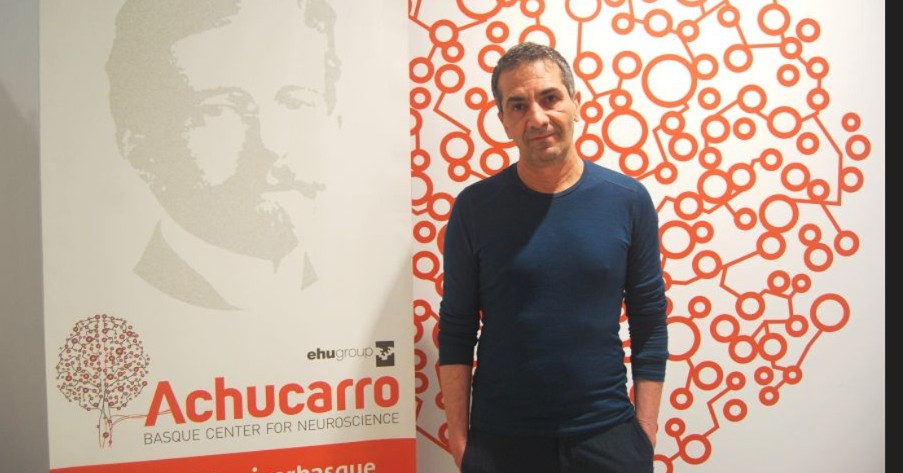
What is a Memory? The Corridor Analogy
For Nabavi, the fundamental concept is synaptic plasticity. According to the researcher, learning occurs when the connections between neurons, called synapses, become stronger or weaker.
To explain this simply Nabavi uses a visual analogy: imagine two cities connected by a corridor. Learning isn’t limited to creating new connections from scratch; it’s about making that corridor wider or narrower. In the brain, this happens through chemical signaling, allowing the communication between neurons to change its strength to form and store memories.
From the Lab Dish to the Real Brain
Much of Nabavi’s early career focused on in vitro studies, analyzing brain tissue outside the body to understand mechanisms at the protein and cellular levels. However, his major contribution was giving evidence that these cellular mechanisms are directly relevant to learning in living beings. His studies confirmed that by manipulating the strength of neuronal connections in a real animal, it is possible to strengthen or weaken a specific memory.
The Enigma of “Lightning and Thunder”
One of the most fascinating projects in his laboratory addresses a temporal contradiction. Humans and animals can relate two events that occur several seconds apart; to illustrate this, Nabavi himself points to the example of seeing lightning and hearing thunder shortly after.
However, individual neurons typically only possess properties that allow them to process very small time differences—about 30 to 40 milliseconds. Nabavi’s research seeks to resolve how the brain “bridges this gap” to associate events separated by significant time.
The Amygdala: The Engine of Rapid Learning
Another pillar of his research is the role of the amygdala, an almond-shaped structure essential for processing fear. Nabavi distinguishes between:
- Innate fear: Such as a natural fear of heights, present even in newborns or mice that have never fallen.
- Learned fear: Such as the danger of a gun, which requires prior experience to identify.
Surprisingly, the amygdala is required for both. According to him, we learn so fast because the brain uses evolutionary “hardwired” (innate) components to facilitate new learning. While a healthy animal might learn to fear a sound after just 2 or 3 trials, an animal without an amygdala could require 60 to 70 trials to learn the same thing.
Transfer Learning: The Human Edge Over AI
Finally, Nabavi investigates Transfer Learning, the ability to apply a learned “structure” to a new situation. As the researcher explains, this process is key to understanding the brain’s efficiency:
- Human Example: If you know Spanish, it is much easier to learn Portuguese or Italian than Japanese, because your brain leverages the linguistic structure you already possess.
- Animal Example: In his laboratory, they observe that a mouse takes about 10 days to learn the basic structure that “a specific smell predicts a reward”. However, once that general rule is learned, the animal can master a new task with different smells in only 1 or 2 days.
Nabavi notes that this is a key difference from basic artificial neural network models, which often lack the capacity to transfer knowledge as efficiently between different tasks. Understanding how the brain retains this “structure” beyond the specific task is the focus of his most recent project.