Home » News » Special Article in Glia about the series of papers (1919) on microglia by Pío del Río-Hortega
Special Article in Glia about the series of papers (1919) on microglia by Pío del Río-Hortega
30Oct2016
Our colleague Amanda Sierra has coordinated the translation of the fundamental works of one of the disciples of Nicolas Achucarro
Dr. Amanda Sierra, group leader of the Laboratory of Glial Cell Biology of ACHUCARRO has coordinated the special article of the November 2016 issue of Glia.
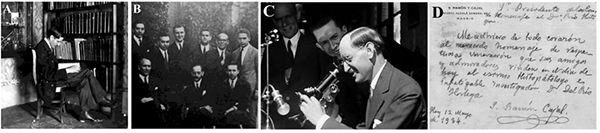
With this work, the authors provide the first English translation of these landmark series of papers, which paved the way for modern glial research. To heighten the value and accessibility of these classic papers and their original figures, an introduction to this critical period of neuroscience has been added, along with unpublished photographs.
Additionally, the authors have also included comments to the translated text, to provide context so that contemporary scientists may fully appreciate it.
Some history…
The word “glia” was coined in the mid-19th century and defined as “the nerve glue”. For decades, it was assumed to be a uniform matrix, until cell theorists raised the “neuron doctrine” which stipulated that nervous tissue was composed of individual cells.
The term “astrocytes” was introduced in the late 19th century as a synonym for glial cells, but it was Santiago Ramón y Cajal who defined a “third element” distinct from glial cells (astrocytes) and neurons.
It was not until 1919 when Pío del Río-Hortega, an alumnus of the Cajal School and disciple of Nicolas Achucarro, introduced the modern terms we use today, and thoroughly described both “oligodendrocytes” and “microglia” to clearly distinguish them from astrocytes. In a series of four papers published that year in Spanish, Río-Hortega described the distribution and morphological phenotype of microglia. He also noted that these cells were the origin of the rod cells described earlier in pathologic tissue, and recognized that resting microglia transformed into an ameboid phenotype in different types of brain diseases and pathologies.